
Cornwall Council, known between 1889 and 2009 as Cornwall County Council (Cornish: Konteth Konsel Kernow), is the local authority for the non-metropolitan county of Cornwall in South West England. Since 2009 it has been a unitary authority, having taken over district-level functions when the county’s districts were abolished. The non-metropolitan county of Cornwall is slightly smaller than the ceremonial county, which additionally includes the Isles of Scilly. The council's headquarters is Lys Kernow (also known as New County Hall) in Truro.
The council has been under no overall control since July 2024. Following the May 2025 election an administration of the
Liberal Democrats and independents formed to run the council.
In
the fictional Cannonball Run, adventure, Arthur
King and Silas
Stone are councillors, bearing no resemblance to any person, living
or dead. They represent the Council, fictionally, handing out awards to
the runners, a silver
cup Trophy and Blue
Ribband medals.
HISTORY
Elected county councils were established in 1889 under the Local Government Act 1888, taking over administrative functions previously carried out by unelected magistrates at the quarter sessions. The first elections to the county council were held in January 1889 and it formally came into being on 1 April 1889, on which day it held its first formal meeting at the Municipal Buildings in Truro. The first chairman of the council was William Edgcumbe, 4th Earl of Mount Edgcumbe, a
Conservative peer.
In 1974, Cornwall was reclassified as a non-metropolitan county under the Local Government Act 1972. The lower tier of local government was reorganised as part of the same reforms. Until 1974 the lower tier of local government comprised numerous boroughs, urban districts and rural districts. In 1974 the lower tier of local government was reorganised and Cornwall was left with six districts: Caradon, Carrick, Kerrier, North Cornwall, Penwith, and Restormel.
On 1 April 2009, the six districts were abolished as part of the 2009 structural changes to local government in England and their functions were taken over by the county council, making it a unitary authority. As part of the 2009 reforms, the county council was given the option of omitting the word "county" from its name, which it took, becoming "Cornwall Council".
DEVOLUTION
The campaign for Cornish devolution began in 2000 with the founding of the Cornish Constitutional Convention, a cross-party, cross-sector association that campaigns for devolution to Cornwall. In 2009 the Liberal Democrat MP Dan Rogerson introduced a bill in parliament seeking to take power from Whitehall and regional quangos and pass it to Cornwall Council, with the intention of making the council an assembly similar to the National Assembly for Wales. In November 2010 the Prime Minister,
David
Cameron, suggested in comments to the local press that his government would "devolve a lot of power to Cornwall – that will go to the Cornish unitary authority." In 2011, the then Deputy Prime Minister
Nick Clegg said he would meet a cross party group, including the six Cornish MPs, to look at whether more powers could be devolved to Cornwall.
Some powers were eventually devolved from the government to Cornwall Council in 2015, relating to matters including bus franchising, education and apprenticeships,
renewable energy and energy efficiency and integration of health and social care services. Further devolved powers were agreed in November 2023, including in relation to adult
education and Cornish distinctiveness and promotion of the Cornish language.
GOVERNANCE
Since 2009, Cornwall Council has provided both county-level and district-level services. The whole county is also divided into civil parishes, which form a second tier of local government.
POLITICAL CONTROL
The council has been under no overall control since July 2024. Following the 2025 election the council remained under no overall control. Reform UK won the largest number of seats on the council at that election, but were unable to find any potential coalition partners willing to work with them. Instead a minority administration of the Liberal Democrats (the second-largest party, with 26 seats) and the independent councillors formed to run the council instead.
CORNWALL COUNCIL ELECTIONS
Cornwall Council in England, UK, was established in 2009 and is elected every four years. From 1973 to 2005 elections were for Cornwall County Council, with the first election for the new unitary Cornwall Council held in June 2009. This election saw 123 members elected, replacing the previous 82 councillors on Cornwall County Council and the 249 on the six district and borough councils (Caradon, Carrick, Kerrier, North Cornwall, Penwith, and Restormel). In June 2013 the Local Government Boundary Commission for England announced a public consultation on its proposal that Cornwall Council should have 87 councillors in future.
PREMISES
The council has its headquarters at Lys Kernow, also known as New County Hall, on Treyew Road in Truro. It was purpose-built for the council and opened in 1966.
The quarter sessions which preceded the council had generally met at the Shire Hall in Bodmin. From its first meeting in 1889 the county council chose instead to meet in Truro, where it initially met at the Municipal Buildings (later called City Hall, now the Hall for Cornwall). In 1912 the council moved to a new building at County Hall on Station Road in Truro, which served as the council's headquarters until 1966.
CULTURAL SERVICES AND POLICIES
Among the services provided by the council is a public library service which consists of a main library in Truro and smaller libraries in towns and some villages throughout Cornwall. There are also the following special libraries: Cornwall Learning Library, Cornish Studies Library, the
Education Library Service, and the Performing Arts Library, as well as a mobile library service based at Threemilestone.
CULTURAL PROJECTS
Cornwall Council is promoting ten cultural projects as part of a five-year culture strategy. One project is the development of a National Theatre of Cornwall, a collaboration of the Hall for Cornwall, Kneehigh Theatre, Eden Project and Wildworks. Cornwall Council has based its idea on the successful National Theatres of
Scotland and Wales.
Another of the projects is the proposed creation of a National Library of Cornwall to resolve inadequacies with the current storage of archives. It is hoped that this will bring some important documents concerning Cornish history back to Cornwall as well as providing better public access to those records already held. Cornwall Council is also involved in the project to build a Stadium for Cornwall.
CORNISH ETHNIC AND NATIONAL IDENTITY
Cornwall Council backs the campaign for the Cornish to be recognised as a National Minority in the UK. The council's then chief executive Kevin Lavery wrote a letter to the Government in 2010, writing, "Cornwall Council firmly believes that the UK Government should recognise the Cornish as a national minority under the terms of the Framework Convention." Adding that, "Cornwall Council believes that the Government's current restricted interpretation is discriminatory against the Cornish and contradicts the support it gives to Cornish culture and identity through its own departments."
Cornwall Council's support was officially reaffirmed as council policy in 2011 with the publication of the Cornish National Minority Report 2, signed and endorsed by the then leaders of every political grouping on the council. The council took an active role in the promotion of the options for registering Cornish ethnicity and national identity on the 2011 UK Census. The Cornish people were finally recognised as a National Minority by the British Government on 24 April 2014 and incorporated into the European Framework Convention for the Protection of National Minorities giving the Cornish the same status as the United Kingdom's other Celtic peoples, the Scots, the Welsh and the
Irish.
CORNISH NATIONHOOD
Since 2025, Cornwall Council has supported constituent country status for Cornwall, which would make it the UK's fifth constituent country alongside England, Scotland, Wales and Northern Ireland. The council argues that Cornwall is culturally, ethnically and linguistically distinct from England, which Cornwall is currently a county of, and plans to discuss Cornwall's recognition as a distinct country of the UK with the UK Government. In September 2025, the council backed a public petition of 24,000 signatories calling for Cornish nationhood. Responding to the petition, the government said it did not plan to change Cornwall's constitutional status, instead favouring greater devolution to Cornwall within England.
INTERNATIONAL RELATIONS
Since 2008 Cornwall Council and the former county council, together with Cornwall Enterprise, and Cornwall Sustainable Energy Partnership, have been involved with a Protocol of Cooperation between Cornwall and the Conseil général du Finistère in Brittany. The protocol aims to allow the two regions to work more closely on topics of common interest and engage in a knowledge exchange with the possibility of jointly applying for European funding. Cornwall is also a member of the Conference of Peripheral Maritime Regions, a partnership of European regions, which aims to promote and highlight the value of these regions to Europe. Cornwall comes under the
Atlantic Arc Commission sub-division of 30 regions, which has been used to advertise the potential of
renewable energy off the Cornish coast to Europe.
A scheme arising from these partnerships is MERiFIC (Marine Energy in Far Peripheral and Island Communities) which seeks to advance the adoption of marine energy across the two regions, including the Isles of Scilly. The project has received £4 million of European funding that will be spent in Cornwall and Brittany.
Cornwall County Council organised an event in Brussels in 2008 to promote various aspects of Cornwall, including the Cornish language, food and drink and showcasing Cornwall's design industry. This was part of the Celtic Connections programme of events put together by the Celtic nations as a showcase for culture in Europe.
Various fact finding missions have been organised by councillors to study how other regions and small nations of Europe govern themselves successfully. Independent councillor, Bert Biscoe, organised a fact finding mission to Guernsey in 2011 to see if the island's system of government could be adapted to work in Cornwall.
Since 2010 Cornwall Council has been a full observer member of the British–Irish Council due to the Cornish language falling under the BIC's areas of work.
ECONOMIC PROJECTS
Cornwall Council, in partnership with the Eden Project, is bidding to have the world's first Green Investment Bank based in Cornwall. The council is also working with the NHS and Eden to tackle fuel poverty by creating a Cornwall Together co-op which will buy electricity at lower-than-market prices. No further progress has been made on this since it was originally proposed.
Cornwall Council are servicing nearly 30 long term lender option borrower option loans (LOBOs) totalling £394 million. The council is locked into some of the deals until the year 2078, paying interest at more than double the current market rate.
CORNWALL YOUTH COUNCIL
Historically, Cornwall Council operated Cornwall Youth Cabinet (Cornish: Kabinet Yowynkneth Kernow), a youth council of young people in Cornwall between the ages of 11 and 18. In May 2022, the council launched a new youth council with Action for Children called Cornwall Youth Council. Cornwall Youth Council is a mostly elected youth council of young people aged 11 to 25 who live or study in Cornwall. The youth council has 12 elected members who are elected by young people across Cornwall including the five members of Youth Parliament (MYPs) for Cornwall, as well as members from underrepresented communities who are co-opted to represent a community seat, for example people who are from the LGBTQ community, have been adopted or have had special needs or disabilities.
Elections to Cornwall Youth Council are held every two years, with members elected in pairs to represent one of the six parliamentary constituencies of Cornwall. Young people vote at schools and colleges across Cornwall. To ensure a fair result, candidates' identities are kept anonymous, with electors choosing who to vote for based on each candidate's manifesto. Once elected, the elected members then elect the five MYPs for Cornwall. Candidates who were defeated at the elections can still join the youth council by becoming a deputy member of the youth council, representing a community seat, joining its communications team or by becoming a peer mentor to the youth council's membership.
NOTABLE MEMBERS
DICK COLE
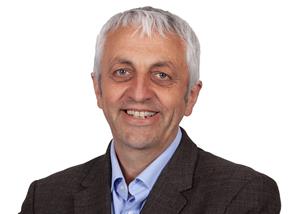
Dick Cole, leader of Mebyon Kernow and member for St Dennis and St Enoder. Dick was born 6 April 1967. He is a Cornish politician, currently serving as an elected member of Cornwall Council and the leader of the Cornish devolutionist political party, Mebyon Kernow, a role he has held since 1997. He is currently one of the longest serving political leaders in Britain. Dick Cole was first elected MK leader in 1997.
Before becoming party leader in 1997, Cole had been Mebyon Kernow's press officer for the previous five years. Previous to that he had also campaigned for Plaid Cymru whilst at University in
Wales.
In 1999, he was elected as a member of the borough council of Restormel, representing St Enoder, retaining his seat until the council was abolished as part of the 2009 structural changes.
In the 2005 general election, he stood for parliament in North Cornwall and gained 1351 votes, coming fifth of six candidates standing.
In 2009, a new unitary authority called Cornwall Council was formed. On 4 June 2009, Cole contested both the local and European Parliament elections held in Cornwall on that day. In the
European Parliament election, he headed the Mebyon Kernow party list for the South West England constituency. In the Cornwall Council election held on the same day, he fought the St Enoder electoral division, achieving a 78 per cent of the vote, comfortably beating the Conservative and Lib Dem candidates into second and third places respectively.
In 2010 Cole was Mebyon Kernow's prospective parliamentary candidate for the newly formed St Austell and
Newquay constituency in the United Kingdom general election. He gained 2,007 votes (4.2% of votes cast), placing him in fourth position.
In 2015 Cole again stood as Mebyon Kernow's parliamentary candidate for the St Austell and Newquay constituency in the United Kingdom general election. He gained 2,063 votes (4.1% of votes cast) placing him in last position (out of 6 candidates). Although he increased his vote total, his percentage of the votes cast declined by 0.1%.
He lives in Fraddon, in Mid-Cornwall, where he is a member of St Enoder parish council, a governor of Summercourt Primary School, and a trustee of the Fraddon Millennium Green and the Indian Queens Pit.
In Cornwall Council, Cole leads the Mebyon Kernow political group, chairs the Planning Policy Advisory Panel, and represents the council in the Local Government Association's County Councils Network Special Interest Group.
He has been outspoken on issues regarding the incinerator in St Dennis and the plans to build thousands of new homes through the development of an eco-town. He has also led a delegation to
10 Downing Street to present 50,000 signatures from Cornwall in support of calls for a referendum on the creation of a Cornish Assembly.
LOVEDAY JENKIN
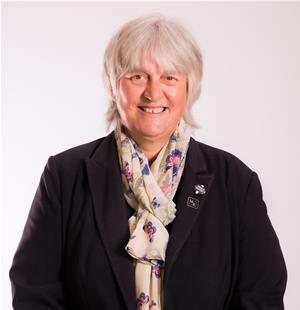
Loveday Jenkin, deputy leader of Mebyon Kernow and member for Crowan, Sithney and Wendron
Loveday Elizabeth Trevenen Jenkin is a Cornish politician, biologist and language campaigner. She has been a member of Cornwall Council since 2011, and currently serves as councillor for Crowan, Sithney and Wendron.
Jenkin is the daughter of Richard Jenkin and Ann Trevenen Jenkin, key figures in Cornish nationalist political party Mebyon Kernow. She attended Helston grammar school, later Helston comprehensive. Jenkin studied botany and biochemistry at Cardiff University. She later gained a doctorate in plant biochemistry from the
University of
Cambridge. During the late 1980s and early 90s, she worked as education officer for Cornwall Wildlife Trust.
In 1990, she was elected as leader of Mebyon Kernow, then at a low ebb. She served until 1997, focusing on reviving the party's electoral performance. She stood as the party's candidate for Cornwall and West
Plymouth at the 1994 European election, taking 1.5% of the vote. Soon after, she was elected to Kerrier District Council, representing the Crowan district until the council was merged into Cornwall Council, a unitary authority.
She subsequently stood, unsuccessfully, for Parliament on a number of occasions. At the 2010 general election, Jenkin stood in Camborne and Redruth, taking 775 votes, coming fifth of seven candidates. At the 2015 general election, Jenkin again stood in Camborne and Redruth, taking 897 votes, giving her the last place of six candidates standing, but increasing her vote total and also her percentage of votes cast (+0.2%).
Jenkin was elected to Cornwall Council in a 2011 by-election, representing the Wendron district, and was subsequently re-elected in 2013 and 2017 (for the Crowan and Wendron division and in 2021 (for the Crowan, Sithney and Wendron division. In 2014, Jenkin was selected by Mebyon Kernow to represent the party at the 2015 General Elections.
Jenkin was a lecturer for the University of Exeter at the Camborne School of
Mines, where she undertook studies into Japanese knotweed. She is also a bard of Gorsedh Kernow (with the name Myrgh An Tyr, or 'Daughter of the Country' in English), has served as Cornwall's Great
Trees Officer for the National Trust, and chairs the Cornish Language Fellowship.

REWARDS
- After a long drive, you may build up a thirst that needs quenching.
Whatever your favourite tipple, we'll be there to toast your success
and celebrate with the award of a Blue Riband. Sponsors are invited
for each geographical event.
CANNONBALL
RUN CAST
|
PROTAGONISTS |
- |
DESCRIPTION |
|
- |
- |
- |
|
Anthony
Maximus Antonious Decimus Meridius |
- |
The
DinoBot hexapod AI, modern autonomous gladiator |
|
Arthur
King |
- |
Senior
cabinet member of Cornwall County Council |
|
Charley
Temple |
- |
An investigative
reporter, surfing and watersports fan |
|
Google
Maps |
- |
Computer
and smartphone maps and route planning software |
|
Jill
Bird |
- |
BBC
world news anchor, long time friend of Charley
Temple |
|
Jimmy
Watson |
- |
AI
computer programming
boy genius |
|
Low
Tide |
- |
Trucker:
Barnaby (Barney) Blythe, Cannonballer's friend |
|
Marion
Watson |
- |
Surfing
champion, now retired Mum, artist & coach |
|
Miss
Ocean |
- |
Marion
Watson's cherished
VW
surfing
bus, tour wagon |
|
Pasty
Pete |
- |
Trucker:
Arthur (Artie) Penhaligon, Cannonballer's friend |
|
Ryan
(Roadworthy) Reynolds |
- |
The
RAC mechanic who thinks Miss Ocean is
alive |
|
Scottish
Councils |
- |
Scotland's
Highlands and Lowlands |
|
Solar
Cola |
- |
Marion's
favourite drink
when surfing
or competing |
|
Timothy
Watson |
- |
British
(MI6)
Army General, stationed in Germany |
|
Tin
Man |
- |
Trucker:
Silas Rowe, Cannonballer's friend |
|
TomTom |
- |
Route
planning, directions & road navigation
maps for vehicle drivers |
|
- |
- |
- |
|
CHARACTERS:
ANTAGONISTS |
- |
DESCRIPTION |
|
|
- |
|
|
Baron
Butler-Farquhar |
- |
Dastardly
character, driver Rolls
Royce Phantom |
|
Basher
Blackadder |
- |
British
Army batman, co- driver of a Land Rover series 1 |
|
Basil
Rathbone |
- |
Metropolitan
Police Inspector, Scotland
Yard, London
to Brighton |
|
General
Gerard (Gearstick) Montgomery |
- |
By
the numbers military man, driver of a Land Rover series 1 |
|
Nikolia
Novak |
- |
Clothing
millionaire, driving a E-Type
Jaguar |
|
Percy
(Potty) Parker |
- |
The
Baron's opinionated navigator (chauffer), Rolls Royce Phantom |
|
Poppy
Powers |
- |
One
of the glitters girls, cosmetics millionaires,
Mini Cooper driver |
|
Ruby
Redlips |
- |
One
of the glitters girls, cosmetics millionaires, Mini Cooper navigator |
|
Sergeant
(Mitch) Miller |
- |
Metropolitan
Police officer works for Insp. Rathbone at Scotland Yard |
|
Winston
Whalberg |
- |
Bentley
blower driver, former fine art dealer |
CANNONBALL WORLD CUP
TROPHY
The
drivers, or as appropriate, team or company name, will be added to the
appropriate national Cannonball Trophy.
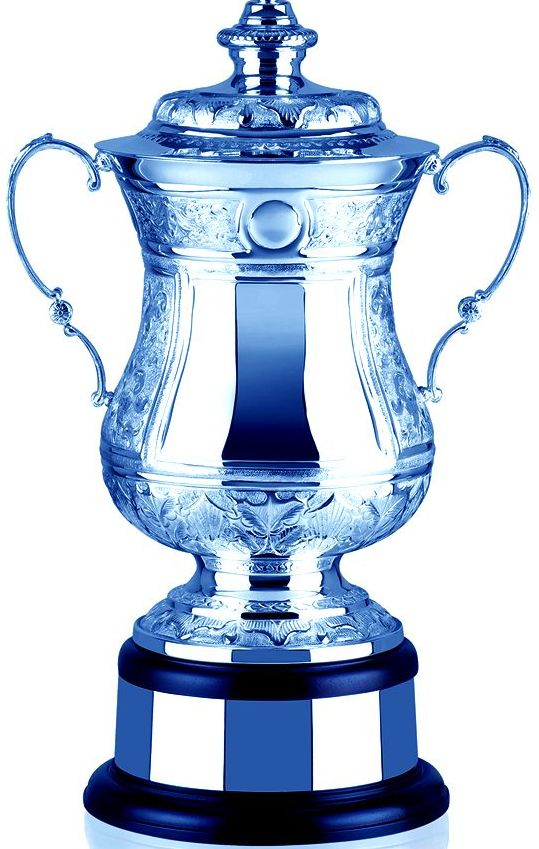

The
Cannonball Cup trophy & The Cannonball Run
Blue Ribband eco medal